
Deep dive
The agreements began shaping daily life across the neighboring villages. Communication grew, goods moved between markets and people found more reasons to work together.
Places once connected chiefly by memories of conflict were becoming connected by practical needs and shared opportunity.
A Network of Different Strengths
Each village retained its identity. Unity did not require every community to become a copy of Nchemti. It meant recognizing that different skills and resources could support one another.
Trade gave those differences a useful place. Training allowed knowledge to move alongside goods. The relationships became more than an announcement made by leaders; they became activities people could take part in.
What Changed at Home
The story closes with an image of renewed life: adults working, children playing near productive fields and older residents watching places they remembered become active again.
Its optimism belongs to the world the narrative has built. The depleted quarry has not returned, and the past has not been undone. What has changed is the belief that those facts must determine every possibility ahead.
More Than One Village
Affue and Arrey look across Nchemti as evening approaches. They had set out to change their own community's habits and prospects. Along the way, that work had helped connect a wider group of settlements.
The achievement was not theirs alone. Farmers, traders, trainees, craftspeople and the women who had sustained the village all belonged to the story of its renewal.
The Inheritance That Remains
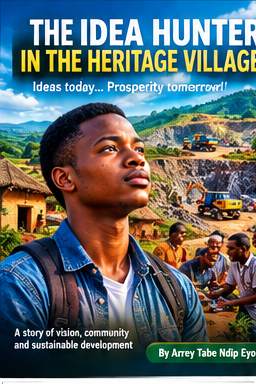
The Idea Hunter began with a question about a resource that would eventually run out. It ends with relationships that can be maintained, knowledge that can be taught and ideas that can be developed.
None of these is effortless. Cooperation must be renewed through choices, and a useful idea must become useful work. But unlike the stone removed from the quarry, they need not disappear simply because people draw upon them.
Nchemti and its neighbors stand not as communities without a difficult past, but as people choosing not to let that past be their only future. Their new inheritance is the capacity to imagine, learn and build together.
What do you think?
Join the conversation
What does this idea reveal to you—and where do you see it differently?
Sign in through your account to add a response. Reading remains open to everyone.
Join the Human Voice newsletter
Join us for exclusive ideas, stories, music and new releases.
No spam. Unsubscribe anytime.
About the creator
Created by Arrey Tabe Ndip Eyong
Original human ideas shaped into stories, music, writing and visual experiences.
Meet the creator