
Deep dive
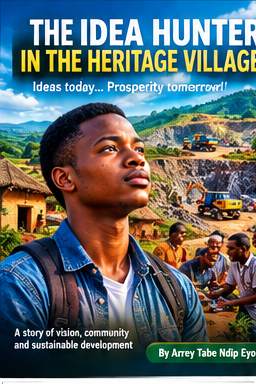
A year after Affue's coronation and Arrey's appointment, Nchemti had found a different rhythm. The quarters' work was no longer an urgent experiment begun in the shadow of the quarry's closure. It was becoming the basis of daily life.
Farming Develops Beyond the First Harvest
The North Quarter improved its crop cultivation through rotation and approaches to pest control. Its produce supplied the village and reached neighboring towns.
The West Quarter strengthened vegetable growing through irrigation and a wider range of crops. Residents were learning not simply to produce once, but to improve the quality and reliability of what they offered.
Better Husbandry and Stronger Products
In the East Quarter, improved animal care helped livestock production grow. Arrey contributed to the practices supporting that change.
The South Quarter's soaps attracted customers beyond Nchemti. Attention to quality made the enterprise more than a local novelty. In the Central Quarter, oil producers reinvested returns into better extraction and refining methods.
Each venture was developing through the work of the people operating it, not only through the plans that had launched it.
Growth That Circulates
The market connected households across the quarters. Money and goods passed between people whose different work now supported one another.
The story presents this exchange as a growing source of prosperity. It also reflects a change in the community's habits: residents were producing, learning and reinvesting instead of simply consuming a payment received from outside.
The Leaders Look On
Affue and Arrey watched the activity with quiet satisfaction. The village had moved from dependence on one finite resource toward several connected livelihoods.
They knew the work was not complete. A useful system had to keep adapting as needs changed and opportunities widened.
A New Understanding of Inheritance
The quarry had once defined what Nchemti believed it possessed. Its new prosperity suggested another inheritance: knowledge, practical skill and the capacity to cooperate.
The land still mattered. So did the history carried by the people. But neither needed to remain tied to the arrangement that had exhausted the stone.
Nchemti was learning to treat the future as something to build, not merely something to wait for.
What do you think?
Join the conversation
What does this idea reveal to you—and where do you see it differently?
Sign in through your account to add a response. Reading remains open to everyone.
Join the Human Voice newsletter
Join us for exclusive ideas, stories, music and new releases.
No spam. Unsubscribe anytime.
About the creator
Created by Arrey Tabe Ndip Eyong
Original human ideas shaped into stories, music, writing and visual experiences.
Meet the creator